

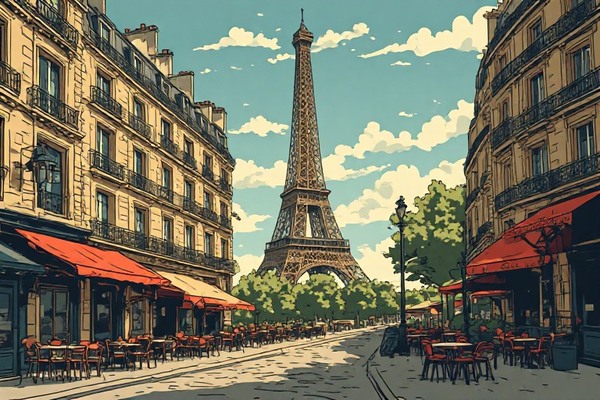
A Parisweek: Visit La Ruche
Rain was falling across Paris when I discovered La Ruche almost by accident. I had been looking for a quiet place to escape the weather after spending the morning walking around Montparnasse. Then I noticed a small entrance hidden behind an old gate.
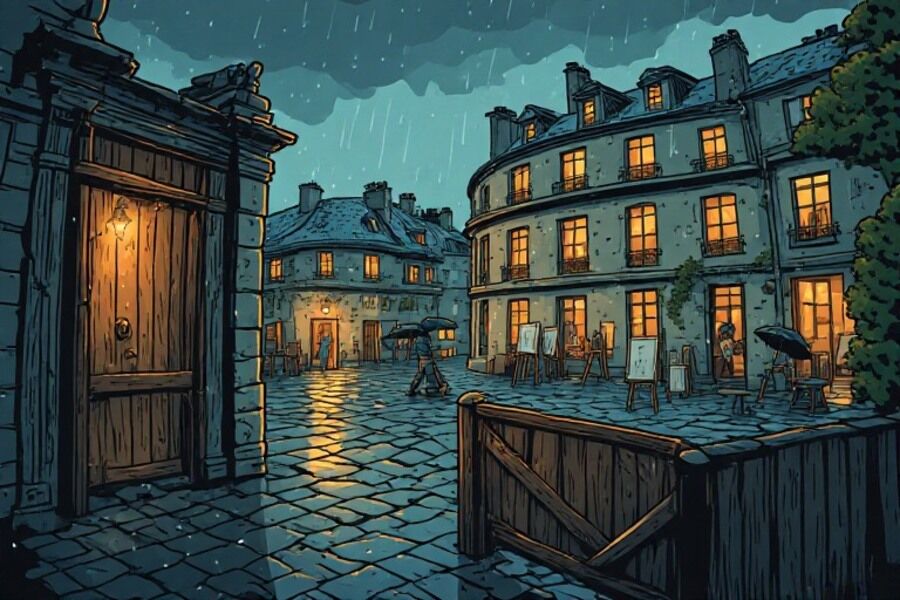
A wooden sign simply said “La Ruche.”
I stepped inside and immediately heard music.
It was not the polished sound of a concert hall. Someone was playing an old piano somewhere inside the building, with a few wrong notes appearing between the melodies.
I followed the music through a narrow corridor until I reached a small courtyard surrounded by unusual studios. Paintings leaned against walls, sculptures stood beneath windows, and colorful pieces of paper were scattered across tables.
A young artist suddenly appeared carrying a large canvas.
“You are late,” she said.
I had never met her before.
Before I could explain, she handed me the canvas and asked me to hold it for a moment.
Could One Painting Bring Everyone at La Ruche Together?
The canvas showed an unfinished Paris street. There were buildings, windows, trees, and tiny figures, but the center of the painting was completely empty.
The artist explained that she had been working on it for weeks but could not decide what belonged in the empty space.
She asked me what I thought should be there.
I suggested a bicycle.
She laughed and said that everyone who visited had suggested something different.
Someone wanted a cat. Another person wanted a flower stand. One artist had suggested a giant moon.
She suddenly had an idea.
Instead of deciding herself, she wanted everyone at La Ruche to add something to the painting.
We carried the canvas into the courtyard.
One artist added a tiny blue bird. Another painted a red umbrella. Someone else added a musician sitting outside a café. A sculptor who claimed he could not paint added a surprisingly good little dog.
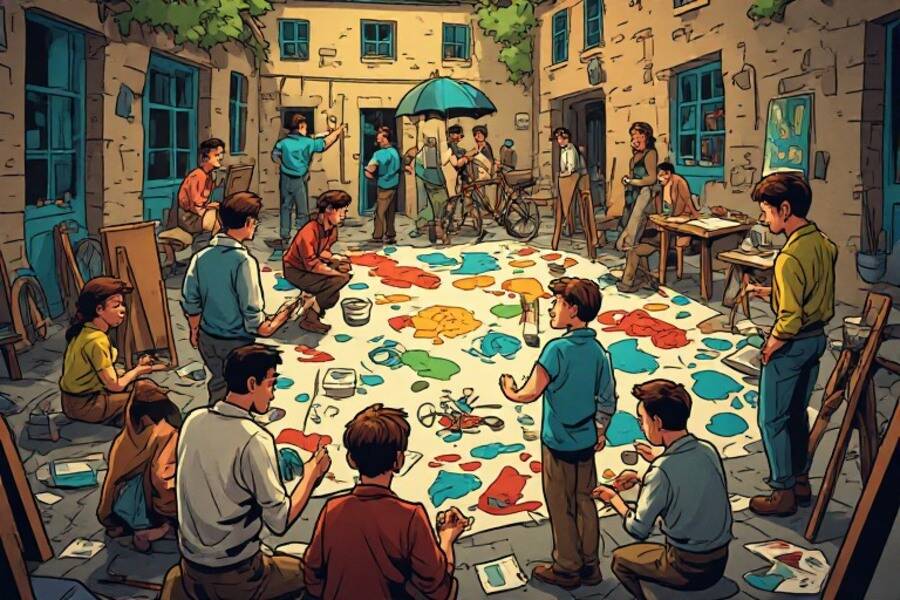
Even the pianist eventually came outside and painted a yellow bicycle.
I was given a small brush and asked to add something too.
I painted a tiny open window near the top of one building.
It was not particularly impressive, but nobody laughed.
Instead, the artist smiled and said that the window made the building feel as though someone was actually living inside it.
As the afternoon continued, more people contributed. The once-empty space became a colorful collection of small stories.
When the rain finally stopped, everyone stepped back to look at the finished painting.
It was strange.
It was crowded.
It was completely imperfect.
And somehow, it was beautiful.
The artist explained that this was what she loved about La Ruche. Artists could work differently, think differently, and even disagree about art, but they could still create something together.
Before I left, she took a photograph of everyone standing beside the painting.
She gave me a small paper copy and told me to keep it as a reminder of the day.
I walked back through the gate and into the streets of Paris.
The rain had left the pavement shining. Café lights reflected in the puddles, bicycles passed through the narrow streets, and the evening sky slowly turned pink.
I looked at the photograph one more time.
La Ruche was more than an old artists’ building. It was a place where unfinished ideas could become shared adventures.
And perhaps that was the most surprising thing I discovered during my Parisweek.
You do not always need to create something alone. Sometimes the most memorable picture is the one made when everyone adds a little piece of their own story.
Parisweek adventure comes to an end, La Ruche leaves behind a simple lesson: creativity grows when people share ideas, take chances, and leave room for others to add their own unexpected touch.