

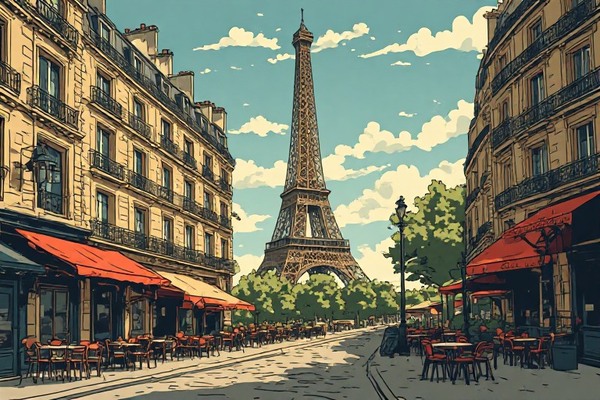
A Parisweek: Meeting Pablo Picasso
Paris has a strange way of making ordinary days feel like adventures. One morning, while walking through the narrow streets of Montmartre, I noticed an old blue door between two buildings. There was no sign, no name, and no explanation. Naturally, I had to find out what was behind it.
I knocked twice. After a moment, the door opened.
A man wearing a simple shirt stood there with a paintbrush in his hand. He looked at me with a curious smile.
It was Pablo Picasso.
For a few seconds, neither of us said anything. I knew this could not possibly be real. Picasso belonged to another time, yet somehow I was standing in his Paris studio as if I had simply arrived a little late for an appointment.
“Come in,” he said. “Paris is waiting.”
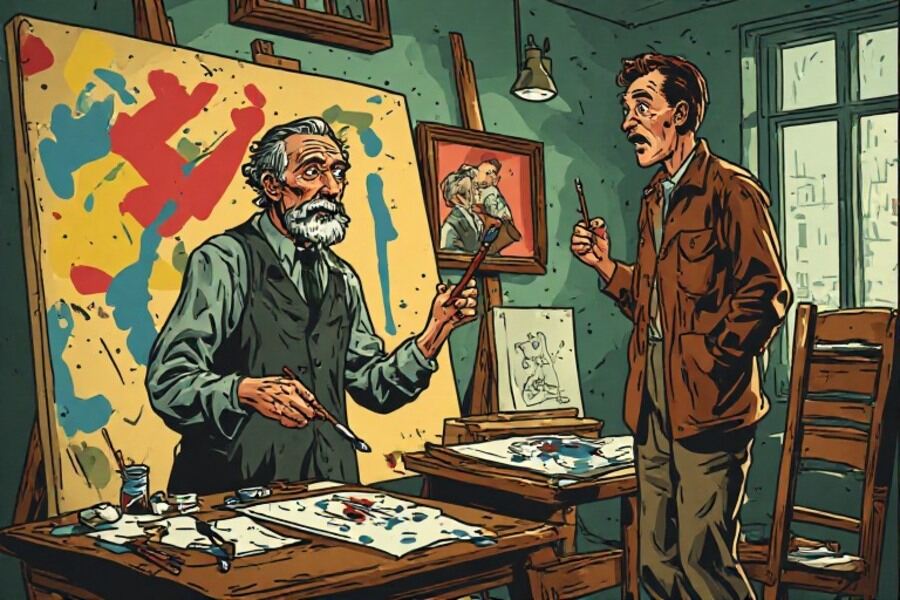
The studio was filled with paintings, sketches, sculptures, old furniture, and objects that seemed to have been collected from everywhere. Nothing looked perfectly organized, but somehow everything seemed to belong exactly where it was.
Picasso picked up a small wooden chair and placed it in front of a blank canvas.
“What do you see?” he asked.
I looked at the chair. “A chair.”
What If We Looked at Paris Differently?
Picasso laughed. “Exactly. But why stop there?”
He began explaining that artists could look at familiar things from unusual angles. A chair could become a shape. A face could become lines and colors. A street could become a collection of movements, shadows, sounds, and memories.
We left the studio and walked through Montmartre. Instead of heading directly toward the famous sights, Picasso stopped every few minutes. He pointed at a café sign, a woman carrying flowers, a sleeping cat, and even a puddle reflecting an old building.
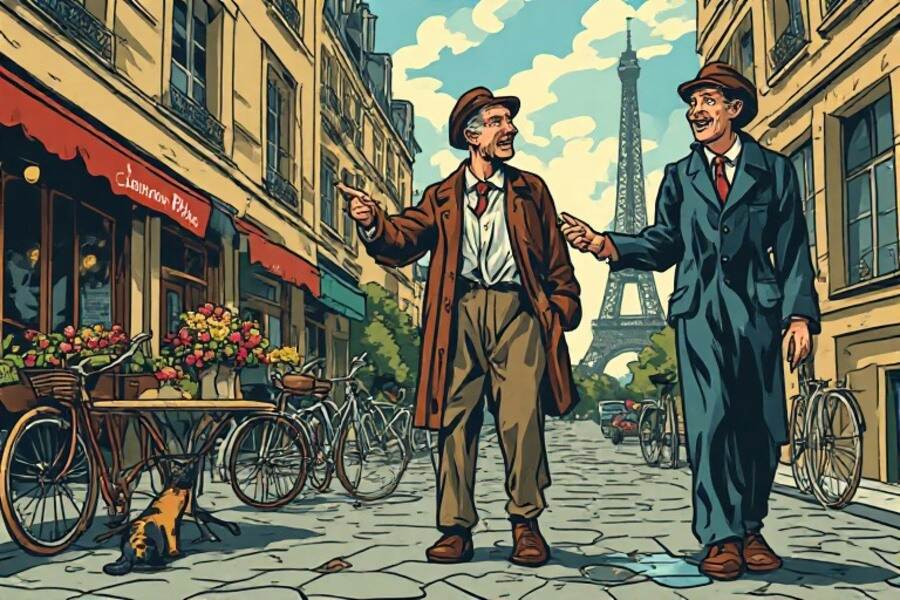
“Look closely,” he said. “The city is always making pictures.”
I started noticing things I would normally walk past without thinking. The reflection of a bicycle in a shop window looked like a painting. A waiter carrying coffee cups moved through the café like part of a little performance. Even the shadows from the buildings seemed to have their own shapes.
We eventually stopped at a small café. Picasso ordered coffee and took a napkin from the table. With a few quick lines, he created a strange little drawing. There was a face, a bicycle, several buildings, and something that looked suspiciously like the Eiffel Tower wearing a hat.
“Paris needs more hats,” he said seriously.
I could not stop laughing.
During our conversation, Picasso told me that creativity was not simply about making beautiful things. It was also about being curious and being willing to see something differently. A person did not need to be a professional artist to notice the unusual details hidden inside everyday life.
As afternoon turned into evening, we returned to the mysterious blue door.
“Remember this,” Picasso said. “Look twice at everything.”
I blinked.
The studio had disappeared.
I was standing alone on the street, and there was no blue door between the buildings. In my hand was the napkin from the café.
The drawing was still there.
Maybe I had dreamed the entire meeting. Maybe Paris had created its own little mystery.
Either way, I continued walking through Montmartre with a different view of the city. The streets looked brighter, the buildings seemed more interesting, and even an ordinary puddle suddenly looked like a tiny work of art. As the Parisweek journey comes to an end, the city leaves behind unforgettable moments, beautiful encounters, and a little bit of magic. Paris reminds us that every street, café, museum, and river can become part of a wonderful story.