





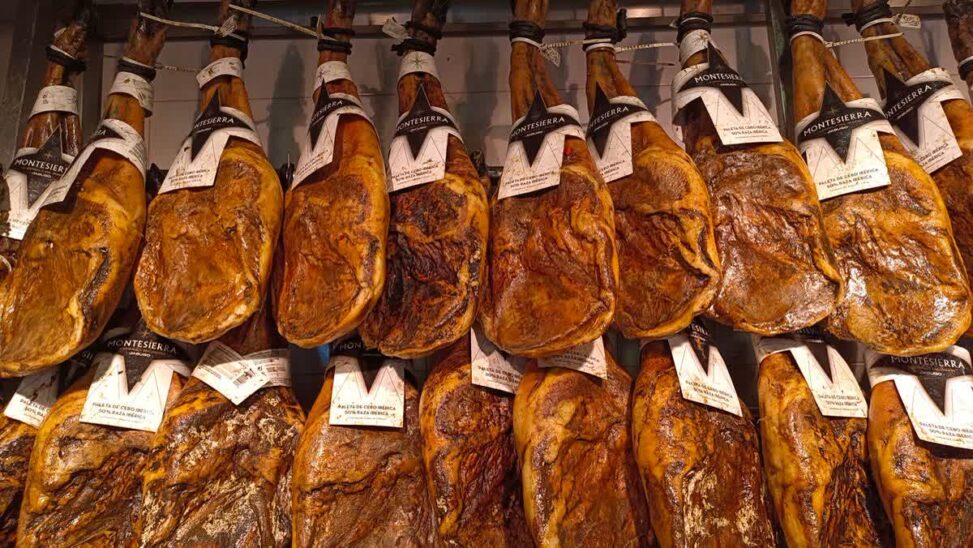
In Spain, cured ham is not a side note—it is a cultural landmark. Two names dominate the conversation: jamón ibérico and jamón serrano. Both are dry-cured hams, both appear in thin translucent slices on wooden boards across the country, and both tell different stories about pigs, landscape, and taste. Knowing where each comes from is the key to understanding why Spaniards treat a good ham with almost ceremonial respect.
From Mountain Air to Dehesa Woodlands
Jamón serrano takes its name from the sierra—the mountains. Historically, cooler mountain climates helped families and producers cure pork legs with salt and long air-drying. Serrano-style ham became a widespread Spanish staple, made typically from white pig breeds and aged for many months until firm, fragrant, and sliceable. It is the everyday cured ham of Spain: present in sandwiches, breakfast plates, and tapas bars from north to south.
Jamón ibérico comes from a more specific world. It is produced from Iberian pigs (cerdo ibérico), a breed native to the Iberian Peninsula and closely associated with the dehesa—the open oak woodlands of southwestern Spain (and parts of Portugal). In the finest categories, pigs roam and fatten on acorns (bellotas) during the montanera season. The resulting ham is cured for long periods, often measured in years, and is protected by strict labeling traditions that distinguish feeding and breeding. If serrano is Spain’s familiar mountain ham, ibérico is its celebrated jewel of the dehesa.
Traditional Character of Each Ham
Both hams begin with a salted pork leg and patient drying, but the raw materials diverge. Serrano is generally leaner in appearance, with a deep pink to rose color and a clean pork aroma. Ibérico, especially acorn-fed grades, shows dramatic marbling: fine seams of fat that melt at room temperature and give slices a glossy sheen. Labels and grades matter in Spain—terms related to breed purity and diet signal very different eating experiences—but the shared tradition is craftsmanship and time.
Serving customs underline the difference in status without excluding either from daily life. Serrano is sliced for bocadillos and casual boards. Ibérico is often carved to order from a mounted ham stand (jamonero), eaten alone or with simple bread and wine so nothing distracts from the meat.
Taste, Texture, and the Difference on the Tongue
Jamón serrano tastes savory, lightly salty, and distinctly porky, with a firm chew that softens as you eat. The flavor is clean and straightforward—cured meat with nutty and faintly sweet undertones depending on aging. It is satisfying and versatile, the ham you can enjoy often.
Jamón ibérico is richer and more complex. Expect deeper umami, notes that people often describe as nutty or oaky (especially in bellota hams), and a luxurious melt as the fat warms on the tongue. The texture can be silkier; the aroma more intense. A thin slice of great ibérico can linger, coating the palate in a way serrano rarely does.
What makes these hams distinctive together is Spanish curing culture itself: salt, air, time, and respect for the animal’s origin. Serrano offers clarity and everyday pleasure. Ibérico offers denser luxury shaped by breed and landscape. Side by side on a board, they map two complementary paths through Spain’s love of cured pork—one rooted in the mountains, the other in the oak-dotted dehesa.