

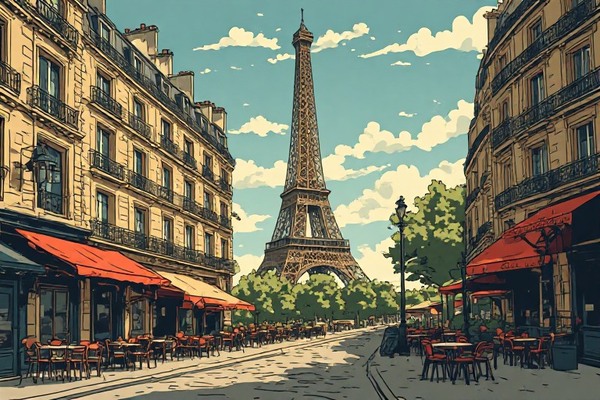
A Parisweek: Cinema with Isabelle Huppert
I was supposed to meet a friend at a Paris cinema, but she never arrived.
It was already ten minutes past the meeting time when my phone buzzed. Her message was short: “I can’t make it. Don’t waste the ticket!”
I looked at the ticket in my hand. The cinema was an old independent theater hidden on a quiet Paris street. I had never been there before, and the film title meant nothing to me.
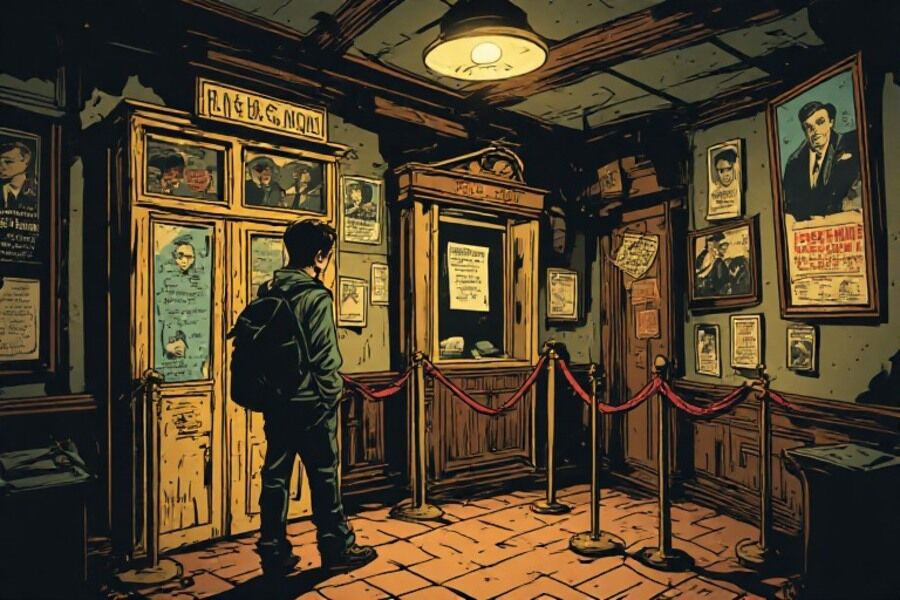
Still, I decided to go inside.
The lobby looked completely different from the modern cinemas I was used to. There were faded movie posters on the walls, velvet ropes around an old ticket booth, and a small display filled with photographs of famous French actors.
While I was studying the photographs, I noticed one frame that had been turned around.
Curious, I turned it back.
Behind it was a handwritten note.
“For the person who arrives alone.”
I laughed quietly. Surely it was part of some cinema game.
The note contained a simple instruction: Seat 17. Row C. Look underneath.
What Could Possibly Be Hidden Under a Cinema Seat?
I found Row C and sat in Seat 17. When I reached underneath, my fingers touched a small envelope taped to the bottom.
Inside was a photograph of Paris and another message.
“Find the scene that doesn’t belong.”
I looked around the theater, wondering whether someone was watching me. Then the lights dimmed.
The film began.
It was an old black-and-white movie showing Paris streets, cafés, apartments, and busy sidewalks. I started looking carefully at every scene, searching for something unusual.
Then I noticed her.
In one scene, standing among a crowd outside a café, was Isabelle Huppert.
She wasn’t part of the movie.
At least, I didn’t think she was.
She appeared again several minutes later in another location. This time she was standing beside a newspaper stand, looking directly toward the camera.
I leaned forward in my seat.
When the film ended, the theater lights came on.
Isabelle Huppert was sitting only a few rows away.
She turned around and smiled.
“You noticed,” she said.
I had no idea what to say.
She explained that the cinema was hosting a special experiment. Instead of simply watching a film, visitors were being encouraged to look for hidden details and unexpected appearances. The photographs and notes were part of the experience.
She handed me another photograph.
“Your final challenge,” she said.
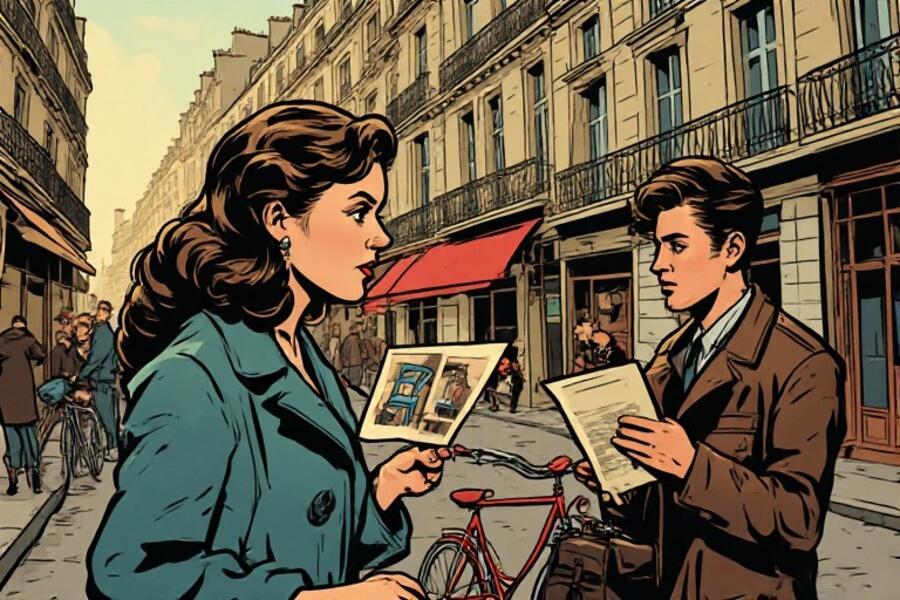
The photograph showed a familiar Paris street. Nothing seemed unusual about it.
We stepped outside and began comparing the photograph with the real street. A bakery was there. A red bicycle was there. The café sign was there.
Then I spotted something missing.
A tiny blue chair appeared in the photograph but not on the real street.
Isabelle laughed.
“Excellent. You were actually looking.”
We walked around the neighborhood, discovering that the cinema had created a collection of small visual puzzles throughout the area. Some were obvious. Others were almost impossible to notice.
By sunset, I had stopped checking my phone completely. I was too busy looking at windows, signs, balconies, bicycles, and people passing by.
Before we said goodbye, Isabelle gave me the first photograph from the cinema.
“Keep it,” she said. “Next time you watch a movie, don’t only watch the main story.”
I returned to the cinema the following evening.
This time, I didn’t need a ticket.
I simply stood outside for a moment and looked at the building.
There was another little blue chair beside the entrance.
I smiled.
Maybe the game was still going.
My Parisweek adventure started because someone cancelled a movie night. Instead of being disappointed, I discovered a playful mystery hidden inside an old cinema and learned that Paris becomes much more interesting when you pay attention to the smallest details.