





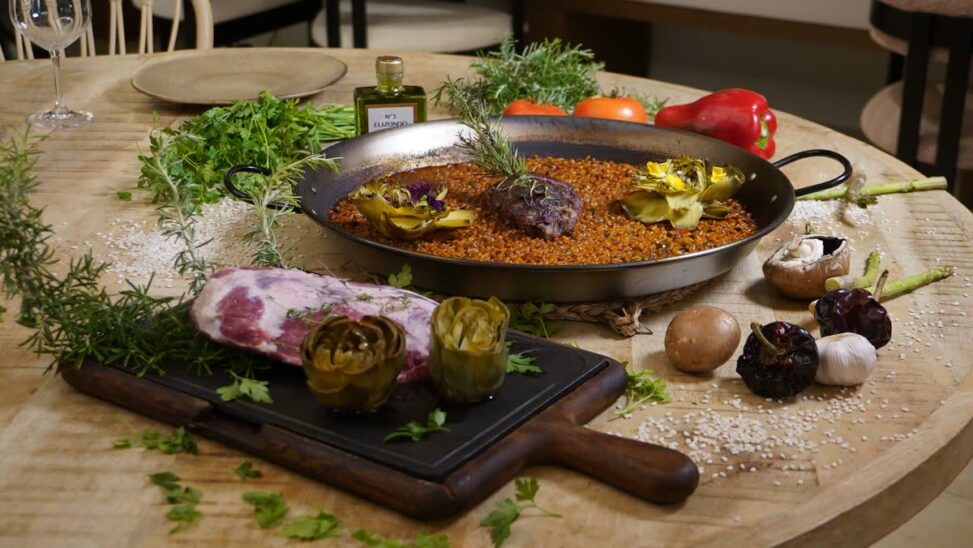
Say “paella” anywhere in the world and people picture a wide pan of golden rice crowned with seafood. In Valencia, the picture is different—and older. Paella Valenciana is not a tourist invention; it is a rice dish rooted in the orchards, wetlands, and farmlands around Valencia, on Spain’s Mediterranean coast. Understanding where it comes from is the best way to understand why its flavor feels so particular.
Born in the Albufera and the Huerta
Valencia has grown rice for centuries in and around the Albufera lagoon and the surrounding huerta (fertile market gardens). Farm communities needed a one-pan meal that could feed a group outdoors, using what the land and backyard provided. That practical tradition shaped paella Valenciana: short-grain rice cooked in a wide, shallow pan over an open fire, absorbing broth flavored by local meats and vegetables.
The word “paella” itself refers to the pan—related to the Latin word for pan—and only later became the name of the dish. Over time, Sunday gatherings and village festivals helped fix the dish in Valencian identity. Seafood paellas and mixed “paella mixta” versions later spread through coastal restaurants and international menus, but the Valencian original remains a land-based dish tied to the region’s agriculture rather than the open sea.
Traditional Ingredients That Define It
Authentic paella Valenciana typically builds on short-grain rice suited to absorbing liquid while staying separate—often bomba or similar Mediterranean varieties grown in the region. Traditional proteins include chicken and rabbit; some local versions also use duck or snails. Vegetables historically include underbeans such as ferraura (flat green beans) and garrofón (large white lima-type beans), sometimes with artichoke depending on season and locality. Seasoning relies on olive oil, salt, sweet paprika (pimentón), and saffron, which lends the rice its famous golden hue and perfume. Rosemary may appear as a fragrant accent.
What you will not find in the classic Valencian template is a pile of shrimp, mussels, and squid. Those belong to other rice traditions along the Spanish coast. The Valencian dish’s identity is rustic and agrarian: poultry, beans, rice, and the scent of the countryside.
Flavor, Aroma, and the Famous Socarrat
The taste of paella Valenciana is savory, gently smoky, and aromatic rather than aggressively spiced. Saffron contributes a floral, slightly honeyed bitterness that is unmistakable once you know it. Paprika adds warmth and color without turning the dish into something hot. The meats lend brothy depth; the beans add earthiness and a soft contrast to the rice grains.
Texture matters as much as flavor. Proper Valencian-style rice is dry and separate, never creamy like Italian risotto. Each grain should be seasoned through. At the bottom of the pan, a prized crust called socarrat can form—toasted, concentrated, and slightly caramelized. Diners often compete for those crunchy bites. The overall experience is communal: the pan stays in the center of the table, and the meal is as much about sharing as about eating.
What makes the flavor distinctive is that sense of place. Paella Valenciana tastes like saffron-tinted rice, open-fire savor, and the mild sweetness of beans and poultry—not like a seafood stew poured over yellow rice. When you taste the real thing, you taste Valencia’s fields and lagoons translated into a single, unforgettable pan.
Today, protected designations and local pride keep the Valencian standard visible even as countless variations travel the world. Ordering paella Valenciana is a reminder that Spain’s most famous rice dish began as farmers’ food—generous, communal, and tied to a specific landscape.