





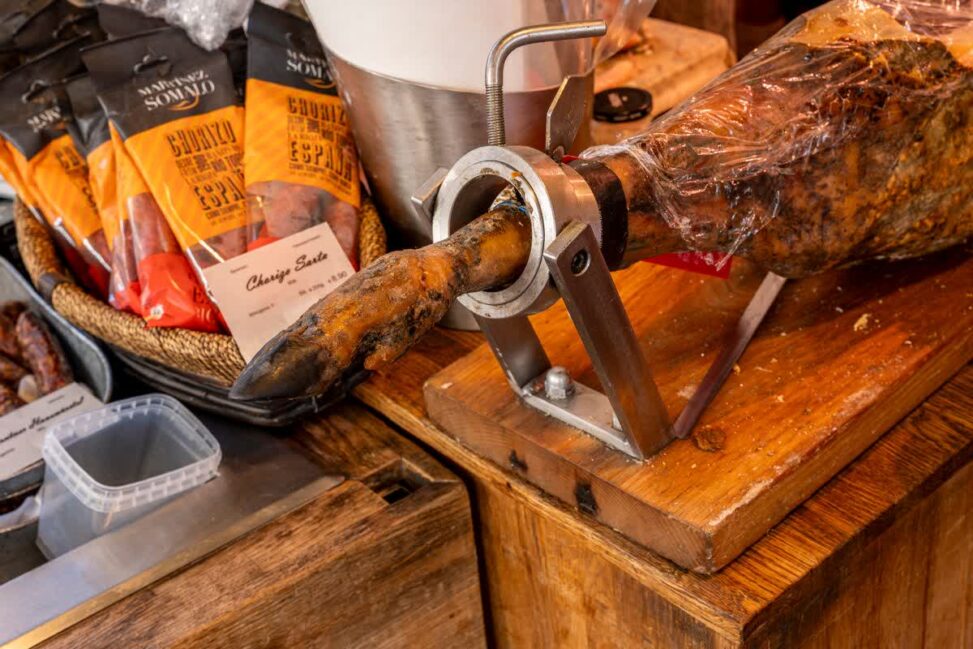
Cut into a Spanish chorizo and the first thing you notice is the color—a deep brick red that stains the knife and announces paprika before you take a bite. Chorizo is one of Spain’s most recognizable cured sausages, a staple of tapas boards, stews, and charcuterie culture. To understand its flavor, you have to understand pimentón and the regional curing traditions that turned pork and spice into a national icon.
Paprika, Pork, and a Spanish Identity
Chorizo as Spain knows it took shape after paprika (pimentón) became central to Spanish cooking. Capsicum peppers arrived from the Americas after the Columbian exchange and, over generations, Spanish regions—most famously areas of Extremadura such as around La Vera—developed smoked and sun-dried paprika that redefined local sausages. Pork stuffed into casings with garlic, salt, and that red pepper powder became chorizo: a sausage defined as much by color and aroma as by meat.
Different parts of Spain produce distinct styles. Some chorizos are firmly cured and ready to slice like salami; others are semi-cured or intended for cooking in stews and grills. Regions from Rioja to Galicia to Castile and León guard local formulas and smoking or drying habits. What unites them is the Spanish idea of chorizo: pork forward, garlic present, and paprika unmistakable—unlike fresh Mexican-style chorizo, which is a different product with its own history.
Traditional Ingredients and Styles
Classic Spanish chorizo relies on chopped or minced pork (often with a balanced fat content), salt, garlic, and pimentón. The paprika may be sweet (dulce), bittersweet, or spicy (picante), and smoked paprika gives many sausages their campfire depth. Some traditional versions include herbs or wine, but paprika remains the signature. After stuffing, the sausages are dried, smoked, or both, depending on the tradition, until they develop a firm texture and concentrated flavor.
You will meet chorizo as thin coins on a tapa plate, as thick slices beside cheese and olives, or as a seasoning ingredient that colors a whole pot of beans or lentils red. Hard-cured chorizo is a charcuterie star; cooking chorizo releases vivid oil that Spanish cooks treat as liquid flavor.
Taste, Aroma, and Mouthfeel
Spanish chorizo tastes bold and savory. Paprika leads with earthy sweetness or gentle heat, often backed by a smoky perfume when smoked pimentón is used. Garlic adds pungency; the pork supplies richness and a satisfying chew. Salt and curing concentrate everything, so a little goes a long way. Spicy versions tingle; sweet versions feel warmer and rounder without sharp burn.
Texture varies by style. Well-cured chorizo is dense, sliceable, and slightly oily at the rim of each coin. Fresher or cooking-oriented links are softer and release more fat when heated. In all cases, the red hue is not cosmetic—it signals the paprika that defines the sausage’s personality.
What makes Spanish chorizo distinctive is that paprika-driven identity. Many cultures cure pork; fewer wrap their national sausage so completely in the aroma of dried red pepper. Bite into it and you taste cured pork, garlic, and the sunny, sometimes smoky depth of pimentón—the flavor of Spanish charcuterie in its most colorful form.
On a Spanish table, chorizo rarely needs ceremony. A few slices, good bread, and perhaps a glass of wine are enough to show why paprika-cured pork became one of the country’s most portable ambassadors of flavor.