





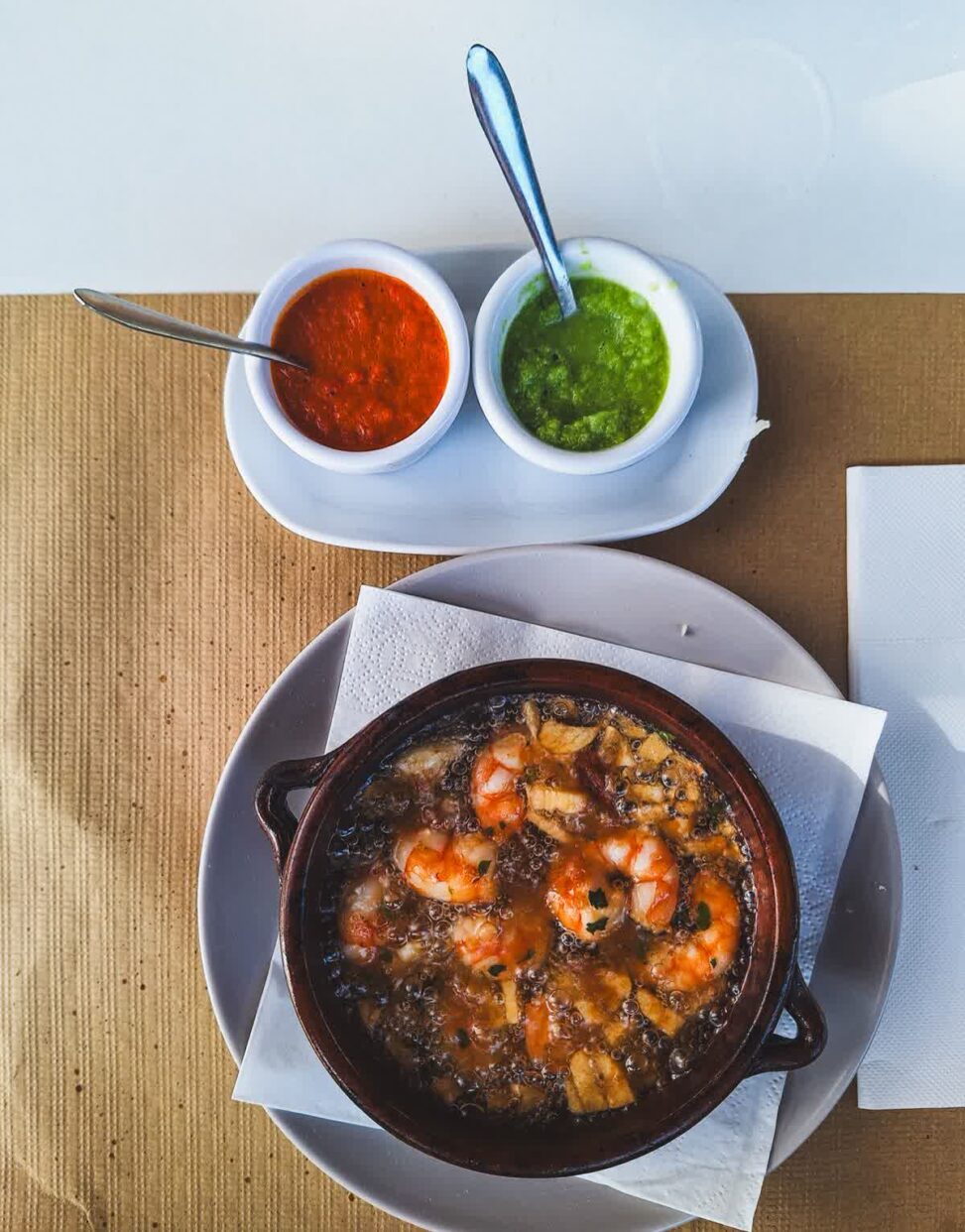
Few Spanish tapas announce themselves as boldly as gambas al ajillo. The dish arrives still hissing in a small clay cazuela or iron pan: shrimp bathing in hot olive oil, garlic slices floating like golden coins, a hint of chili in the steam. Before you taste it, you smell it—garlic, warm oil, and the sweet brine of seafood. It is simple, loud, and utterly Spanish.
A Tapas Classic With Southern Roots
Gambas al ajillo belongs to Spain’s tapa culture, especially associated with Andalusia and central Spain, where bars serve small plates meant for standing conversation and shared bites. Garlic and olive oil are pillars of Mediterranean Spanish cooking; combining them with fresh shrimp created a bar snack that travels easily from Seville to Madrid and beyond. The dish fits the logic of tapas: intense flavor, quick service, and a sauce worth mopping with bread.
Shrimp and prawns have long been part of Spain’s coastal diet, from Atlantic waters to the Mediterranean. In inland cities, seafood tapas became a way to bring the coast to the bar counter. Gambas al ajillo thrived because it needs no elaborate garnish—just good shrimp, assertive garlic, and oil hot enough to perfume the room. Today it is one of the most recognizable Spanish seafood plates worldwide, still closest to its spirit when served sizzling and shared.
Traditional Ingredients and Character
The traditional lineup is short: shrimp or prawns (gambas), abundant olive oil, sliced or chopped garlic, and a touch of dried chili or guindilla for gentle heat. Salt finishes the seasoning; parsley often adds a fresh green note at the end. Some versions include a splash of white wine or brandy, but the core identity remains garlic-forward shrimp in fragrant oil.
Clay cazuelas are classic serving vessels because they hold heat, keeping the oil bubbling as the dish reaches the table. That theatrical arrival is part of the experience. The oil is not a discardable byproduct—it is half the dish, infused with garlic and shrimp juices, meant to be scooped onto bread.
How It Tastes and Why It Sticks in Memory
The flavor is immediate and layered. First comes garlic: pungent, toasted at the edges, sweetened by the heat of the oil. Then the shrimp—plump, slightly sweet, with a clean oceanic taste. Chili contributes a warm tickle rather than overwhelming spice, waking up the palate without masking the seafood. Olive oil ties everything together with fruitiness and body.
Texture contrasts keep each bite interesting. The shrimp should be tender and springy, never rubbery. Garlic chips can be soft and mellow or lightly crisp. The oil coats the mouth richly, so a piece of crusty bread is almost mandatory. Aromatically, the dish is unmistakable: if you walk past a Spanish kitchen when a cazuela of gambas al ajillo hits the table, you know exactly what is being served.
What makes it distinctive is concentration. There is no heavy sauce, no cream, no complicated spice blend—only the marriage of garlic, oil, chili, and shrimp. That clarity is why gambas al ajillo feels both rustic and addictive, a tapa that tastes like Spanish bars at their most generous: hot, fragrant, and meant to be shared.